metal stamping manufacturing equipment: Explore Modern Press Types and Applications
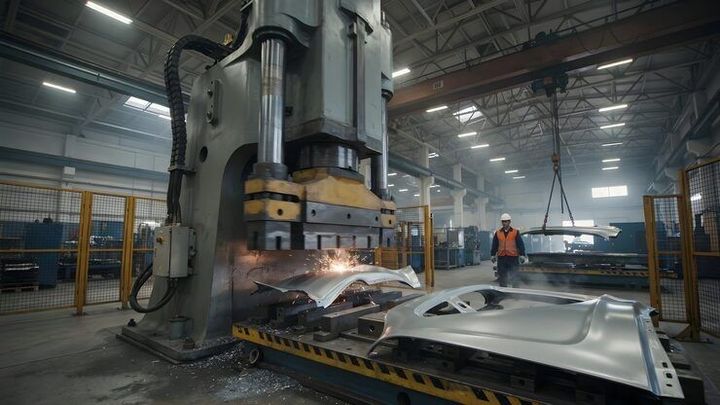
Metal stamping manufacturing equipment forms the mechanical foundation of many high-volume metalworking operations.
These systems transform sheet metal or strip material into precise components through controlled forming, cutting, bending, punching, or drawing processes. The equipment selected can strongly influence production consistency, part geometry, material handling, and tooling requirements.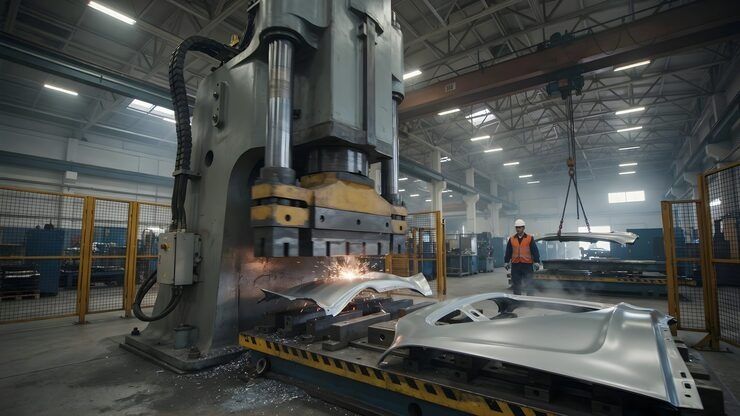
Modern stamping operations range from relatively simple mechanical presses to sophisticated servo-driven systems integrated with automated feeders and inspection technologies. Manufacturers increasingly select equipment based on material characteristics, part complexity, production volume, dimensional requirements, and the type of tooling involved.
Understanding the major press types and their applications makes it easier to see why different stamping systems are designed for different production conditions. It also provides useful context for evaluating press capacity, operating speed, automation, tooling compatibility, and process control.
How Modern Metal Stamping Equipment Works
Metal stamping uses a press and a die set to apply controlled force to metal material. Depending on the tooling arrangement, the process can cut a profile, create holes, bend a section, form a three-dimensional shape, or produce a deeper drawn component.
A typical production setup includes the press, upper and lower tooling, material feeding equipment, controls, and systems for removing or transferring finished parts. In automated operations, sensors and programmable controls coordinate these elements to maintain consistent movement and timing.
Press selection starts with the part rather than the machine itself. Material thickness, tensile strength, required forming force, dimensions, production volume, and the number of operations needed all influence the appropriate equipment configuration.
Mechanical Presses for High-Speed Production
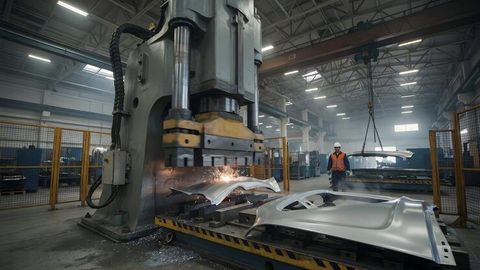
Mechanical presses use a motor-driven flywheel and mechanical linkage to transfer energy to the ram. They are widely associated with high-volume stamping because they can operate at relatively high speeds and provide repeatable motion.
These presses are commonly used for components that require repeated cutting, punching, bending, or shallow forming operations. Their production characteristics make them suitable for progressive dies, where a strip of material moves through multiple stations and several operations occur during successive press strokes.
Mechanical presses are generally described by their rated capacity, stroke length, shut height, and operating speed. These parameters must be matched with the tooling and material rather than considered independently.
Hydraulic Presses for Controlled Forming
Hydraulic presses generate force through hydraulic cylinders rather than a mechanical crank mechanism. Their operating characteristics make them useful when a process requires controlled force throughout a longer stroke.
They are particularly relevant to deep drawing, complex forming, and applications involving larger components or materials that require carefully managed deformation. The ram can typically be controlled across different portions of its movement, providing flexibility for processes where force and stroke control are important.
Hydraulic equipment can also be useful when a stamping operation requires substantial forming depth. Instead of prioritizing extremely rapid cycling, the process can emphasize controlled material flow and consistent forming conditions.
Servo Presses and Programmable Motion
Servo presses use servo motors and advanced drive systems to control ram movement electronically. Unlike conventional mechanical presses with a more fixed motion profile, servo systems can provide greater flexibility in how the ram accelerates, decelerates, and moves through the stroke.
This programmable motion can be valuable for complex forming operations. The press can be configured to spend more time in particular portions of the stroke or adjust movement characteristics to suit a specific material and die design.
Servo technology also supports precise production control and can facilitate process optimization. For manufacturers handling multiple part designs, the ability to change motion profiles electronically can provide greater flexibility than a fixed mechanical cycle.
Choosing Between Different Press Configurations
No single press type is appropriate for every stamping application. The choice depends on the relationship between the component, material, tooling, production requirements, and available automation.
| Press type | Typical strength | Common applications |
|---|---|---|
| Mechanical | High-speed repetitive production | Blanking, punching, bending, shallow forming |
| Hydraulic | Controlled force and stroke | Deep drawing, large forming operations |
| Servo | Flexible programmable motion | Complex forming and precision applications |
Capacity is another critical consideration. A press must generate sufficient force for the operation while maintaining appropriate operating margins. Selecting equipment solely according to maximum tonnage can overlook important factors such as stroke characteristics, die space, energy requirements, and material feeding.
Progressive, Transfer, and Four-Slide Applications
The press itself is only one part of a stamping system. Die configuration determines how material moves through the manufacturing process and how multiple operations are combined.
Progressive stamping feeds material through a die containing several stations. Each press stroke advances the strip, allowing operations such as piercing, bending, and forming to occur sequentially. This approach is particularly suited to producing large quantities of relatively small components.
Transfer stamping moves individual workpieces between different die stations. Mechanical or automated transfer systems reposition the component as it progresses through forming operations. This configuration can accommodate larger or more complex parts than many progressive setups.
Four-slide equipment approaches forming differently by using multiple slides that can move horizontally or from different directions. It can be useful for smaller components requiring several bends or forming actions in a compact production process.
Automation and Material Handling
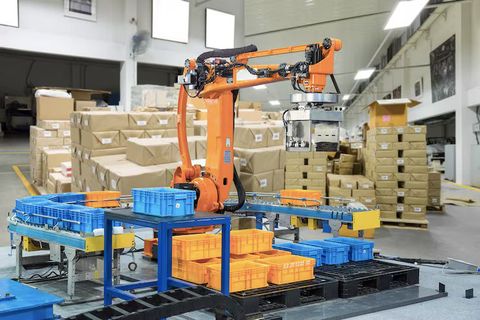
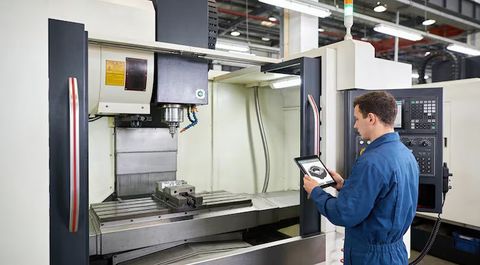
Modern metal stamping manufacturing equipment frequently operates as part of an automated production cell. Automated feeding is especially important in continuous strip processing, where material must enter the die at a controlled rate and position.
Common supporting equipment includes decoilers, straighteners, servo feeders, transfer mechanisms, part conveyors, and scrap removal systems. These components work together to maintain material alignment and production rhythm.
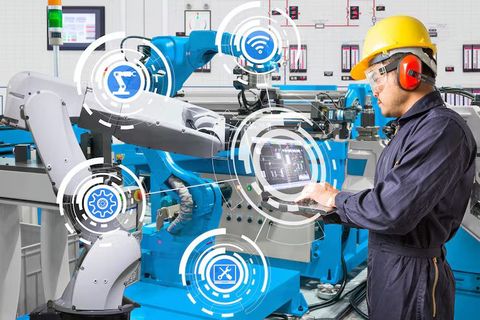
Sensors can monitor material position, press operation, die conditions, and other process variables. When integrated with programmable controls, these systems can help identify abnormal conditions before they result in extended production interruptions or damaged tooling.
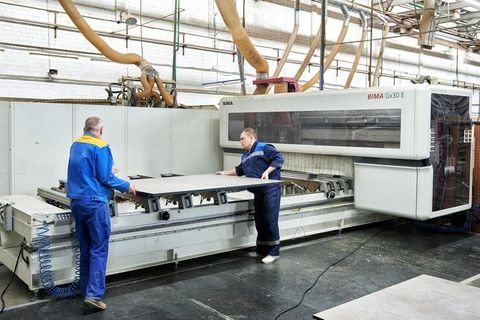
Automation also changes the role of operators. Instead of manually positioning every component, personnel can increasingly focus on setup, inspection, process monitoring, tooling changes, and maintenance.
Tooling, Materials, and Part Accuracy
A capable press cannot compensate for unsuitable tooling or poorly controlled material. The die must be designed around the material's thickness, mechanical properties, geometry, and required forming operations.
Common stamping materials include carbon steel, stainless steel, aluminum, copper alloys, and other sheet or strip metals. Each material behaves differently during cutting and forming. Factors such as work hardening, springback, ductility, and surface characteristics can influence the final component.
Tooling design also affects dimensional accuracy and die life. Clearances between cutting components, forming radii, guide systems, lubrication, and material restraint all contribute to process performance.
For precision applications, manufacturers may combine stamping with secondary operations such as deburring, tapping, assembly, or inspection. The overall production system therefore needs to be considered rather than evaluating the stamping press in isolation.
Applications Across Modern Manufacturing
Metal stamping equipment supports a broad range of industrial applications because the underlying processes can be adapted to many component geometries.
Automotive manufacturing uses stamping for structural panels, brackets, reinforcements, clips, and other metal components. Electrical and electronics production uses stamping for terminals, contacts, shields, and small precision parts.
Industrial equipment manufacturers may use stamped components for housings, mounting brackets, structural elements, and mechanical assemblies. Appliance manufacturing also relies on forming and stamping for panels, brackets, supports, and internal components.
The application determines the required combination of press force, speed, precision, tooling arrangement, and automation. A small electrical contact and a large structural panel may both be stamped, but their equipment requirements can be substantially different.
Process Control, Maintenance, and Safety
Reliable stamping production depends on more than machine capability. Preventive maintenance helps keep presses, feeders, lubrication systems, sensors, and tooling operating within their intended conditions.
Operators and maintenance personnel monitor factors such as unusual vibration, lubrication problems, tooling wear, alignment issues, and changes in finished-part dimensions. Detecting these conditions early can reduce the risk of equipment damage and inconsistent production.
Safety systems are equally fundamental. Press operations involve substantial mechanical forces and rapidly moving components, so guarding, interlocks, emergency controls, safe setup procedures, and appropriate operator training are essential parts of the production environment.
Modern equipment may also incorporate condition monitoring and diagnostic functions that provide information about machine performance. These technologies can support maintenance planning while helping production teams identify developing process issues.
Frequently Asked Questions
What is metal stamping manufacturing equipment used for?
It is used to cut, punch, bend, draw, and form sheet or strip metal into specific component shapes. Applications range from small electrical parts to large automotive components.
What is the difference between mechanical and hydraulic presses?
Mechanical presses use a motor-driven mechanical mechanism to move the ram, making them well suited to repetitive high-speed operations. Hydraulic presses use fluid-powered cylinders and provide greater control over force and stroke.
When are servo presses useful?
Servo presses are useful when a stamping process benefits from programmable ram movement. They can provide greater control over speed and motion during complex forming operations.
Why is tooling important in metal stamping?
Tooling determines how the material is cut or formed. Die geometry, clearances, forming radii, and material control directly influence part accuracy, production consistency, and tool life.
What factors influence press selection?
Important factors include material type and thickness, required forming force, component geometry, production volume, stroke requirements, die dimensions, automation needs, and the desired production cycle.
Conclusion
Modern metal stamping manufacturing equipment combines presses, dies, material handling systems, controls, and inspection technologies into coordinated production processes. Mechanical, hydraulic, and servo presses each have distinct operating characteristics that suit different forming requirements.
The right equipment depends on the complete manufacturing application rather than press capacity alone. Understanding material behavior, tooling, automation, process control, and component geometry provides a stronger foundation for evaluating how a stamping operation should be configured.