Industrial Production Automation Integration: Discover Smarter Workflow Design
Industrial production automation integration has become central to modern manufacturing as factories connect machines, control systems, sensors, software, and production data into coordinated workflows.
Instead of treating each production stage as an isolated activity, integrated automation creates a continuous flow of information and physical operations.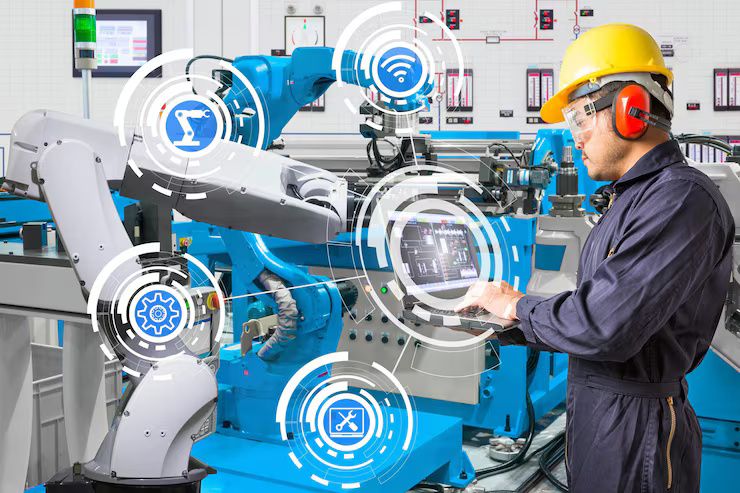
The shift matters because manufacturing environments are increasingly complex. Production teams must coordinate multiple machines, manage changing production requirements, maintain quality standards, and respond quickly to equipment or process disruptions. Connected automation can make these activities more visible and easier to coordinate.
Effective integration is not simply a matter of installing automated equipment. It requires thoughtful workflow design, communication between systems, reliable data exchange, appropriate control logic, and careful consideration of how people interact with automated processes.
Why Workflow Design Matters in Automation Integration
Automation performs best when the underlying workflow is clearly structured. A production process can contain highly advanced machines and still experience delays if materials, information, inspections, and machine states are poorly coordinated.
Workflow design determines how a production order moves from one stage to the next. It defines when equipment starts, what conditions must be satisfied before a task begins, how information is transferred, and what happens when an abnormal condition occurs.
A well-designed workflow also makes dependencies visible. For example, a machine may require confirmation that a component is available, a previous operation is complete, and a quality check has passed before it can proceed. Integrating those conditions prevents unnecessary machine cycles and reduces process interruptions.
Connecting the Major Layers of a Production Environment
Industrial production automation integration often involves several layers that must communicate reliably. These can include field devices, programmable logic controllers, supervisory systems, manufacturing software, databases, and enterprise applications.
Sensors and actuators operate close to the physical production process. Programmable logic controllers, or PLCs, process signals and control machinery in real time. Supervisory Control and Data Acquisition systems and human-machine interfaces provide operators with visibility into machine conditions and production activity.
At a higher level, Manufacturing Execution Systems can coordinate production schedules, materials, quality information, and work instructions. Enterprise systems may then consume production information for broader planning and reporting.
The integration challenge is making these layers work together without creating unnecessary complexity.
Designing Workflows Around the Production Process
A strong automation architecture begins with the process rather than the technology. Engineers first need to understand how materials move, where decisions occur, which steps are time-sensitive, and where quality requirements must be verified.
Mapping the workflow helps identify bottlenecks and unnecessary handoffs. It can also reveal tasks that depend heavily on manual communication, such as confirming production status, entering machine readings, or transferring inspection information between departments.
Once the process is understood, automation can be introduced where it creates measurable operational value. This approach reduces the risk of automating inefficient processes without first correcting the underlying workflow.
The Role of Sensors and Real-Time Data
Sensors provide the operational information required for integrated automation. Depending on the application, they can monitor temperature, pressure, vibration, position, flow, speed, presence, or other physical conditions.
When sensor information is connected to control and supervisory systems, production teams gain greater visibility into what is happening on the factory floor. Real-time data can help determine whether a process is operating within expected parameters or whether intervention is required.
Data becomes more useful when it is placed in context. A temperature reading on its own may mean little, but a temperature trend combined with machine state and production cycle information can provide a clearer understanding of process behavior.
Standardized Communication Improves Integration
Different machines and systems may use different communication protocols, data structures, and interfaces. Without a reliable integration strategy, connecting them can create fragile workflows and difficult maintenance requirements.
Industrial communication technologies such as OPC UA, industrial Ethernet, and fieldbus systems help devices and control platforms exchange information in structured ways. The appropriate method depends on the equipment, required response time, architecture, security requirements, and existing infrastructure.
Standardization also supports future expansion. When data interfaces and naming conventions are consistent, organizations can integrate additional equipment more easily and avoid creating a separate integration method for every machine.
Automation Should Include Exception Handling
A production workflow cannot be designed only around normal operating conditions. Machines stop, sensors fail, materials arrive late, network connections are interrupted, and quality checks sometimes produce unexpected results.
Effective workflow design therefore includes defined responses for exceptions. A system might pause a sequence, redirect a production unit, alert an operator, or place a machine into a controlled state depending on the situation.
Exception handling is particularly important in tightly connected production environments because one failure can affect several downstream processes. Clear fault logic helps prevent an isolated issue from becoming a larger operational disruption.
Human Oversight Remains Essential
Industrial automation reduces repetitive manual activity, but people remain essential to safe and effective production. Operators interpret unusual conditions, perform maintenance, manage process changes, and make decisions that may fall outside programmed logic.
Human-machine interfaces should present information clearly rather than overwhelming operators with raw data. Critical alarms, machine states, diagnostic information, and process trends need to be understandable at the point where decisions are made.
Good workflow design therefore considers both machine behavior and human behavior. The goal is not merely to remove manual steps, but to create a system in which people can interact with automation efficiently and confidently.
Building Quality Into the Automated Workflow
Quality control becomes more effective when inspection activities are integrated directly into the production sequence.
Automated inspection systems can verify dimensions, detect defects, confirm assembly conditions, or monitor process parameters without requiring every result to be recorded manually. When inspection data is linked to production records, organizations can trace quality outcomes back to specific machines, processes, or production batches.
This creates a more connected quality workflow. Instead of identifying problems only at the end of production, manufacturers can detect process deviations earlier and make adjustments before more material passes through the same process.
Cybersecurity and System Resilience
Greater connectivity introduces another consideration: cybersecurity. When industrial control systems communicate with enterprise networks, remote platforms, and connected devices, the overall attack surface becomes broader.
Automation integration should therefore consider network segmentation, access controls, authentication, secure communications, software updates, backup strategies, and monitoring. Security requirements should be incorporated during system design rather than added only after deployment.
Resilience is equally important. Critical systems should be designed with appropriate redundancy, recovery procedures, and clearly defined responses to communication or equipment failures.
Measuring Whether Integration Is Working
Automation integration should be evaluated using operational outcomes rather than the number of connected devices.
Useful indicators can include equipment availability, production cycle time, throughput, unplanned downtime, first-pass quality, changeover performance, and response time to process deviations.
These measurements help determine whether the integrated workflow is actually improving production performance. They also reveal where additional engineering work may be needed.
Regular performance reviews can identify new bottlenecks as production conditions change, ensuring the automation architecture continues to support operational objectives.
A Practical Path to Smarter Workflow Design
Organizations approaching industrial production automation integration can benefit from a staged methodology. Begin by documenting the current workflow and identifying the most significant sources of delay, inconsistency, manual data handling, or limited visibility.
Next, establish the required control functions, communication paths, data requirements, and operator interactions. Integration standards should then be selected according to technical requirements rather than convenience alone.
Before broad deployment, test the workflow under both normal and abnormal conditions. Simulating faults, communication interruptions, and process variations can expose weaknesses that may not appear during straightforward production trials.
Finally, treat integration as an evolving engineering discipline. Production processes change, equipment is replaced, and data requirements grow. A flexible architecture makes future improvements easier without requiring a complete redesign.
Frequently Asked Questions
What does industrial production automation integration mean?
Industrial production automation integration is the coordinated connection of machines, sensors, control systems, software, and production data so that different parts of a manufacturing process can operate as one connected workflow.
Why is workflow design important in automation?
Workflow design defines how materials, information, machine actions, quality checks, and operator decisions move through production. A well-designed workflow helps prevent unnecessary delays and improves coordination between connected systems.
Which technologies are commonly involved?
Typical technologies include PLCs, sensors, actuators, industrial networks, HMIs, SCADA systems, Manufacturing Execution Systems, databases, robotics, and enterprise software platforms.
How can automation integration support quality control?
Integrated systems can collect process and inspection data during production, identify deviations earlier, and associate quality results with specific machines, batches, or process conditions.
Does automation eliminate the need for operators?
No. Operators remain important for supervision, maintenance, exception handling, process changes, and decisions that require contextual judgment beyond programmed automation logic.
Conclusion
Industrial production automation integration is fundamentally a workflow design challenge as much as a technology challenge. Connecting machines and software can create significant improvements only when the resulting system reflects the real production process, communicates reliably, handles exceptions, and provides useful information to the people responsible for operations.
Smarter workflow design brings together control systems, industrial communication, real-time data, quality processes, cybersecurity, and human oversight. When these elements are engineered as one coordinated environment, automation can support more consistent production, clearer operational visibility, and greater resilience as manufacturing requirements evolve.