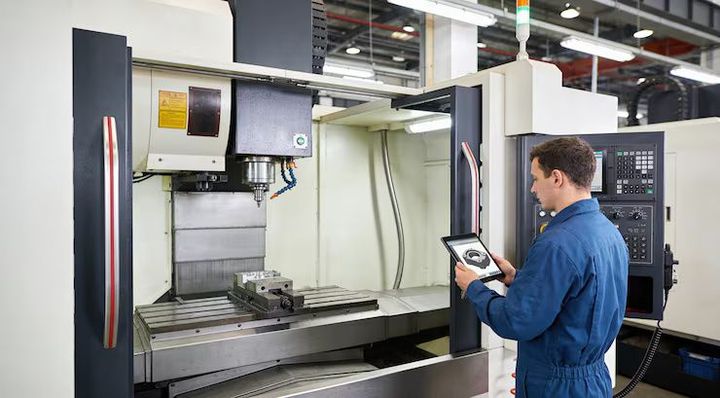
Precision CNC Machinery Discover Selection Factors for Modern Production
Precision CNC machinery plays a central role in modern production environments where dimensional accuracy, repeatability, and efficient material processing are essential.
From aerospace components and medical devices to automotive parts and industrial assemblies, computer numerical control technology allows manufacturers to produce complex geometries with tightly controlled machining processes.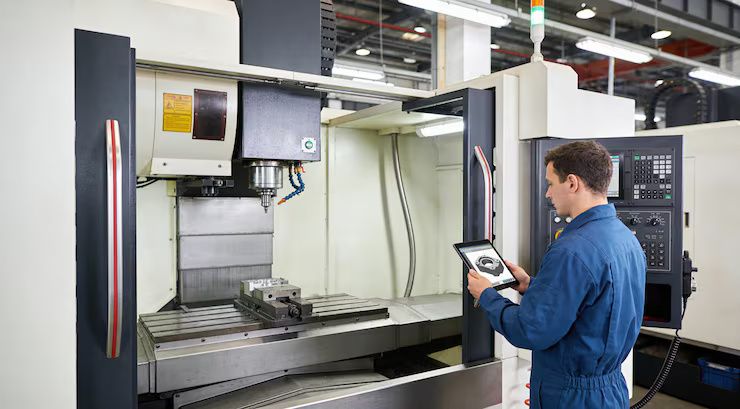
Choosing appropriate CNC equipment is not simply a matter of selecting the machine with the most advanced specifications. Production requirements vary widely, and factors such as material type, component geometry, tolerances, throughput, workspace, tooling, and automation can significantly influence machine suitability.
A thoughtful selection process therefore starts with the parts and production workflow rather than the machine itself. Understanding these factors helps manufacturers match equipment capabilities with actual production requirements and avoid limitations that can affect quality, efficiency, and long-term operational performance.
Start With the Machining Requirements
The first step in evaluating precision CNC machinery is understanding exactly what the equipment must produce. Part dimensions, geometry, material characteristics, tolerance requirements, surface finishes, and production volumes all influence the appropriate machine configuration.
A machine designed for relatively simple prismatic components may not be appropriate for complex multi-axis parts. Similarly, equipment optimized for high-volume production may not provide the flexibility required for frequently changing low-volume work.
Production engineers should therefore establish a clear machining profile before comparing individual machines. This profile provides a practical reference for evaluating specifications and identifying which capabilities are genuinely necessary.
Machine Configuration and Axis Capability
The number of controlled axes has a direct effect on the type of components a CNC machine can process efficiently.
Three-axis machining remains common for many applications and can handle a wide range of flat, pocketed, drilled, and contoured components. Four- and five-axis configurations provide additional movement, allowing tools to approach workpieces from different orientations.
Five-axis machining can reduce the number of setups required for complex components while improving tool access and maintaining closer relationships between multiple surfaces. However, additional axes also increase programming and process-planning complexity.
The right configuration depends on the geometry being produced. More axes are not automatically better if the production workflow does not require them.
Accuracy, Repeatability, and Machine Rigidity
Precision production depends on more than the nominal accuracy stated in a machine specification. Thermal stability, mechanical rigidity, vibration control, spindle condition, guideway design, and environmental conditions can all influence actual machining performance.
Accuracy refers broadly to how closely a machine can position or cut relative to the intended location. Repeatability describes how consistently the machine can return to the same position across repeated operations.
Machine rigidity is especially important when cutting hard materials or using aggressive machining parameters. A rigid structure can help maintain dimensional stability and reduce unwanted vibration during demanding operations.
For highly precise production, manufacturers should evaluate performance under realistic operating conditions rather than relying exclusively on brochure specifications.
Spindle Performance and Cutting Capability
The spindle determines how effectively a CNC machine can rotate cutting tools and transfer power into the machining process. Spindle speed and torque should be considered together because different materials and operations require different cutting conditions.
High spindle speeds can benefit small tools and certain non-ferrous machining applications, while heavier cutting operations may require greater torque at lower speeds. Spindle taper and tool interface compatibility also influence tooling selection and machining flexibility.
Thermal management is another consideration. Spindles that maintain stable operating temperatures can help reduce thermal variation, which becomes increasingly significant in precision applications.
Control Systems and Programming
The CNC control system acts as the interface between the machining program and the machine's mechanical components. Its capabilities can influence programming efficiency, operator usability, data handling, diagnostics, and integration with manufacturing software.
Modern control systems may support advanced toolpath functions, graphical simulation, collision avoidance, tool monitoring, remote diagnostics, and networking capabilities. Compatibility with existing computer-aided manufacturing workflows is particularly important for companies already using established programming processes.
An effective control system should make complex machining easier to manage without introducing unnecessary operational complexity.
Tooling and Workholding Compatibility
Tooling and workholding can have a major influence on machining efficiency. A technically capable machine may still perform poorly if tools, fixtures, or workholding systems do not match the production process.
Manufacturers should consider tool magazine capacity, automatic tool-changing speed, tool diameter limitations, coolant delivery, fixture access, and the ease of setting up different components.
Workholding deserves particular attention for parts requiring multiple orientations. Hydraulic or pneumatic fixtures, modular systems, rotary tables, and automated loading arrangements can reduce setup time while improving consistency across repeated production cycles.
Automation and Production Integration
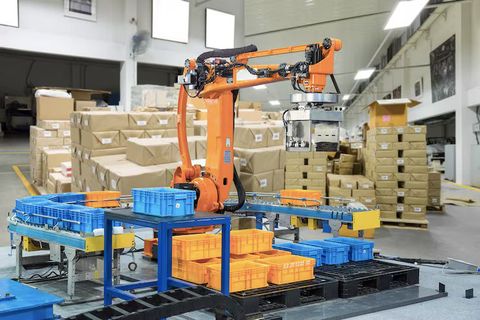
Modern production increasingly connects CNC machinery with other manufacturing systems. Automation may range from basic automatic tool changing to pallet systems, robotic part handling, in-process measurement, and centralized production monitoring.
Automation becomes particularly valuable when machines must support extended production cycles or repeated part sequences. Automated loading and unloading can reduce manual intervention, while probing systems can assist with workpiece alignment and dimensional verification.
However, automation should support an appropriate production workflow rather than being introduced solely for technological sophistication. The level of integration should reflect production volume, component variety, labor requirements, and process stability.
Material and Application Considerations
Different materials impose different demands on CNC equipment. Aluminum, stainless steel, titanium, hardened steels, plastics, composites, and specialized alloys can require substantially different cutting conditions.
Harder materials may require greater spindle torque, stronger machine structures, specialized tooling, controlled cutting parameters, and effective heat management. Certain materials may also generate abrasive chips or require particular coolant strategies.
Understanding the material mix is therefore essential when assessing machine capability. A machine that performs well with aluminum may not provide the same results when regularly machining difficult aerospace alloys.
Maintenance, Thermal Stability, and Reliability
Precision cannot be separated from machine condition. Even a highly capable CNC system can experience declining performance when maintenance is neglected.
Critical considerations include lubrication systems, spindle maintenance, guideway condition, coolant management, chip evacuation, calibration procedures, and diagnostic capabilities. Preventive maintenance helps detect mechanical degradation before it causes significant dimensional problems.
Thermal behavior also matters because machine components expand and contract as temperatures change. Production environments requiring tight tolerances may benefit from equipment designed with strong thermal management and compensation capabilities.
Evaluating the Complete Production Workflow
Selecting precision CNC machinery should involve more than reviewing individual machine specifications. The equipment must fit the complete production process, from material preparation and programming through machining, inspection, and finished-part handling.
A useful evaluation considers:
- Typical component dimensions and geometry
- Required tolerances and surface finishes
- Material types and hardness
- Expected production volume
- Number of required machining operations
- Tooling and fixture requirements
- Automation potential
- Inspection and measurement processes
- Operator skill requirements
- Maintenance and uptime considerations
This broader view helps identify whether a machine can support the entire manufacturing workflow rather than only perform individual cutting operations.
Common Selection Mistakes to Avoid
One frequent mistake is prioritizing maximum machine specifications instead of practical requirements. Extra spindle speed, additional axes, or oversized workspaces may have limited value when they are unrelated to actual part requirements.
Another problem is overlooking workholding, tooling, inspection, and programming considerations. These supporting systems can influence production performance just as significantly as the machine's core mechanical specification.
Ignoring future production changes can also create limitations. Manufacturers should consider whether the selected equipment can accommodate expected changes in materials, component complexity, automation, or production volumes without requiring a complete process redesign.
Frequently Asked Questions
What makes CNC machinery suitable for precision production?
Precision CNC machinery combines accurate motion systems, rigid machine structures, stable spindles, reliable controls, and consistent process conditions to produce components with controlled dimensions and repeatable results.
Is five-axis CNC machining always necessary?
No. Five-axis machining is valuable for complex geometries and multi-surface components, but simpler parts may be produced efficiently with three- or four-axis equipment.
How important is spindle performance?
Spindle speed, torque, thermal stability, and tool compatibility directly affect cutting performance. The appropriate spindle configuration depends on the materials, tools, and machining operations involved.
Why does machine rigidity matter?
Rigidity helps resist vibration and structural deflection during cutting. This is particularly important when machining hard materials, using larger tools, or applying demanding cutting parameters.
Should automation be considered when selecting CNC machinery?
Automation should be evaluated according to production volume, part consistency, labor requirements, and workflow complexity. It can be valuable when repeated operations justify automated material handling or process monitoring.
Conclusion
Selecting precision CNC machinery requires a detailed understanding of the production environment rather than a simple comparison of equipment specifications. Axis configuration, accuracy, repeatability, spindle characteristics, controls, tooling, workholding, material requirements, automation, and maintenance all influence how effectively a machine can support manufacturing operations.
The strongest selection decisions connect machine capabilities directly to the parts being produced and the workflow surrounding them. By evaluating the entire production process, manufacturers can identify equipment that provides the necessary precision, flexibility, reliability, and integration for modern production requirements.