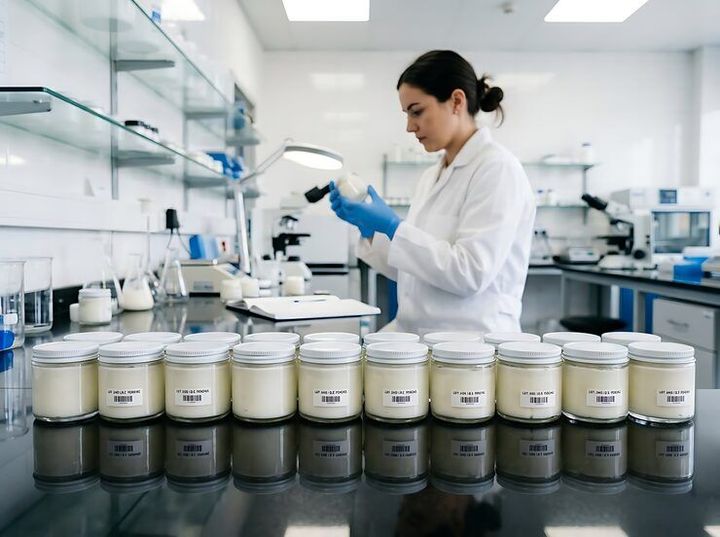
private label supplement manufacturers: Explore Modern Production Processes
Private label supplement manufacturers play a central role in bringing nutritional products from formulation concepts to finished packaged products.
Their production work can involve ingredient sourcing, formulation, blending, testing, packaging, labeling, and quality documentation.
Modern supplement production is more structured than simply combining ingredients and placing them into capsules or containers. Manufacturers typically operate through controlled processes designed to maintain consistency, traceability, product specifications, and regulatory compliance throughout multiple production stages.
Understanding how these processes work provides useful context for anyone researching supplement manufacturing. The key areas include formulation development, raw-material controls, production technology, quality testing, packaging, documentation, and the safeguards used to maintain batch-to-batch consistency.
From Product Concept to Production Formula
The production process usually begins with a defined product specification. This identifies the intended dosage form, ingredients, serving size, target characteristics, and other technical requirements before manufacturing begins.
Formulation teams consider factors such as ingredient compatibility, stability, physical characteristics, processing requirements, and appropriate dosage levels. A formula that looks straightforward on paper may require considerable development work because ingredients can behave differently during blending, compression, encapsulation, or liquid processing.
The formulation stage may also involve selecting suitable excipients. These supporting ingredients can influence flow, texture, stability, dissolution, appearance, and manufacturing performance.
Once a formulation is established, production documentation translates the formula into controlled manufacturing instructions. This creates a consistent reference for the manufacturing team and helps establish how each batch should be processed.
Raw Materials Require Controlled Handling
Ingredient quality directly affects finished-product quality, making raw-material management an important part of modern production.
When ingredients arrive at a manufacturing facility, they may undergo identification and quality checks before being released for production. Documentation can include supplier information, specifications, analytical results, lot numbers, and certificates of analysis.
Materials are generally handled according to defined storage requirements. Temperature, humidity, light exposure, and segregation requirements can matter for ingredients that are sensitive to environmental conditions.
Traceability is equally important. A properly controlled system allows a manufacturer to associate ingredients with specific production batches. This information becomes valuable when investigating quality issues or reviewing production records.
Modern Blending and Dosage Technologies
Blending is one of the most important stages for products containing multiple powdered ingredients. The objective is to distribute ingredients consistently throughout the batch so that individual servings meet established specifications.
Modern facilities may use specialized mixers designed for different powder characteristics. Particle size, density, moisture content, and flow behavior can influence how effectively ingredients blend.
For capsules and tablets, the blended material moves into additional processing stages. Capsule equipment fills measured quantities into shells, while tablet presses compress powder or granulated material into defined shapes.
Liquid supplements require different production methods. Ingredients may be dissolved, dispersed, or suspended in a liquid base before filling. Mixing conditions and processing times can affect uniformity and stability.
Manufacturing technology therefore depends heavily on the physical characteristics of the formulation rather than following one universal process.
Quality Control Runs Through the Entire Process
Quality control is not limited to testing the finished product. Modern manufacturing systems use controls at several points throughout production.
During manufacturing, operators and quality personnel may monitor parameters such as weight variation, appearance, moisture, fill quantity, blending performance, and other characteristics relevant to the specific dosage form.
Finished-product testing can then evaluate whether a batch meets predetermined specifications. Depending on the formulation, analytical testing may examine identity, potency, purity, microbiological characteristics, contaminants, or other relevant attributes.
Testing requirements vary according to the ingredient, product category, formulation, jurisdiction, and applicable regulations. A responsible manufacturing process therefore relies on product-specific specifications rather than assuming every supplement requires the same testing panel.
Good Manufacturing Practices Shape the Workflow
Good Manufacturing Practices, commonly abbreviated as GMP, provide a framework for controlling manufacturing operations. In the United States, dietary supplement manufacturers are subject to FDA requirements established under dietary supplement GMP regulations.
GMP principles address areas such as personnel, facilities, equipment, production controls, quality control, specifications, recordkeeping, and handling of components and finished products.
The practical objective is consistency and control. Equipment should be suitable for its intended purpose, manufacturing procedures should be documented, and quality decisions should be supported by appropriate records.
GMP systems also emphasize traceability. Production records can help establish which materials were used, how a batch was processed, and what quality checks were performed.
Testing and Documentation Create Product Traceability
Documentation is often less visible than the physical manufacturing process, but it is essential to controlled supplement production.
A batch record can contain information about the materials used, quantities, processing stages, equipment, personnel, dates, and quality checks associated with a particular production run.
Certificates of analysis may provide analytical information about raw materials or finished products, depending on the testing program. Additional records can document deviations, investigations, corrective actions, and release decisions.
This documentation creates a history for each batch. If an unexpected result appears during testing, quality teams can use production records and material information to investigate potential causes.
Traceability also supports controlled inventory management. Lot numbers allow materials and finished products to be connected across different stages of the manufacturing process.
Packaging Is Part of Product Protection
Packaging serves more purposes than presenting a finished supplement. It can protect the product from moisture, oxygen, light, contamination, and physical damage depending on the formulation and packaging system.
Capsules and tablets may be packaged in bottles, blister formats, or other suitable containers. Powders can require containers designed to limit moisture exposure, while liquid products may require packaging compatible with the formulation.
Packaging operations also involve controlled filling, closure, labeling, and inspection. The correct product, container, label, lot information, and other required details must be associated with the appropriate production batch.
Label control is particularly important because an incorrect label can create a significant quality and regulatory issue even when the physical product itself was manufactured correctly.
Stability Helps Determine Product Performance Over Time
A supplement's characteristics can change during storage. Moisture, temperature, oxygen, light, and chemical interactions may influence ingredients and finished-product characteristics.
Stability programs are therefore used to understand how a formulation behaves under defined storage conditions. Testing can examine relevant characteristics at different points during the product's expected storage period.
Stability information can support decisions involving packaging, storage conditions, specifications, and appropriate labeling information.
The specific stability approach depends on the formulation and applicable regulatory requirements. There is no single testing schedule that applies equally to every supplement.
Where Automation Fits Into Modern Manufacturing
Automation is increasingly used to improve process control and reduce avoidable variation. Modern facilities can use automated weighing systems, electronic batch records, production monitoring equipment, filling systems, and inspection technologies.
Automation does not remove the need for trained personnel. Instead, it can provide more consistent execution of defined procedures while generating production data that quality teams can review.
Digital systems can also improve traceability by connecting material records, production information, testing results, and release documentation. When properly implemented, these systems create a clearer record of what happened during a manufacturing cycle.
The value of automation depends on appropriate validation, maintenance, calibration, and oversight. A highly automated process still requires sound procedures and quality management.
How Batch Consistency Is Maintained
Batch-to-batch consistency depends on controlling multiple variables simultaneously. Ingredient specifications, equipment settings, processing conditions, environmental controls, and testing procedures can all influence the final product.
Manufacturers establish specifications and operating procedures to reduce unnecessary variation. When a process changes or produces an unexpected result, quality teams may investigate the deviation before deciding whether additional action is required.
Supplier qualification is another important consideration. Consistent raw materials make it easier to maintain a stable manufacturing process, particularly when formulations depend on ingredients with variable physical or chemical characteristics.
The goal is not simply to produce one acceptable batch. Modern manufacturing systems are designed to establish repeatable processes that can be monitored and documented over time.
What Makes a Modern Production Process Reliable?
A reliable supplement manufacturing process is built around controlled systems rather than one individual production technique.
The main elements work together:
- Defined product and raw-material specifications
- Controlled ingredient handling and storage
- Validated or appropriately controlled production processes
- In-process quality checks
- Finished-product testing
- Accurate batch documentation
- Traceability through lot identification
- Controlled packaging and labeling
- Stability considerations
- Corrective and preventive quality procedures
Each element addresses a different potential source of variation. Together, they create a manufacturing framework capable of producing consistent products while supporting quality and regulatory requirements.
Conclusion
Private label supplement manufacturers operate through a combination of formulation science, production technology, quality control, testing, documentation, and regulatory processes. Modern production is designed around controlled workflows rather than a single manufacturing step.
From raw-material verification through blending, encapsulation, testing, packaging, and batch release, each stage contributes to the final product's consistency and traceability. Automation and digital documentation can strengthen these systems, but trained personnel and effective quality oversight remain essential.
Understanding these processes makes it easier to evaluate how modern supplements move from formulation concepts to controlled production. The strongest manufacturing systems are those where formulation, operations, testing, documentation, and quality management function as one connected process.