Business central air conditioner: Explore Modern Cooling System Features
Modern commercial buildings need cooling systems that do more than lower indoor temperatures. A business central air conditioner must often manage comfort across multiple rooms, respond to changing occupancy, maintain indoor air quality, and operate efficiently throughout demanding schedules.
Central air conditioning has become increasingly sophisticated as buildings adopt digital controls, variable-speed equipment, zoning strategies, and smarter monitoring. These developments allow cooling systems to respond more precisely instead of operating at a single fixed level throughout the day.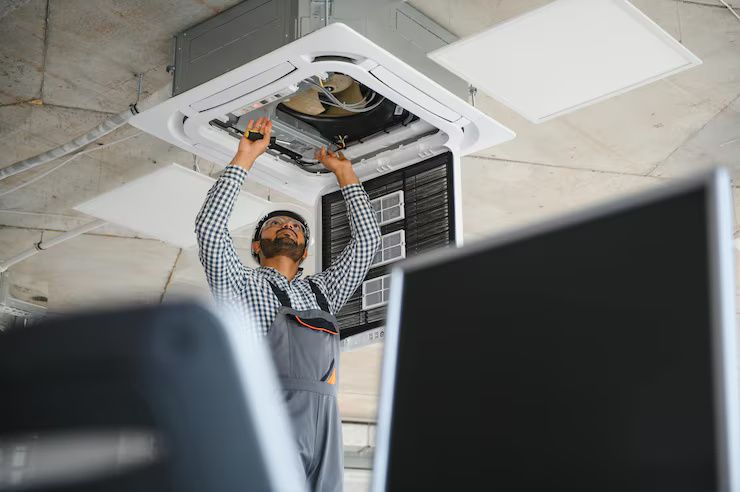
Understanding these features helps building managers, facility teams, and business owners recognize how modern central cooling systems operate. It also provides useful context when evaluating system design, maintenance requirements, comfort control, and long-term building performance.
How a Central Air Conditioner Serves a Business
A central air conditioning system typically cools air at a central location and distributes conditioned air throughout a building. Unlike a standalone room unit, it can serve multiple spaces through a coordinated network of equipment, ductwork, controls, and air distribution components.
The basic cooling cycle remains similar to other air-conditioning technologies. Refrigerant absorbs heat from indoor air through an evaporator coil, transfers that heat through the refrigeration circuit, and releases it outdoors through a condenser.
For a business environment, however, the system has to manage much more than the refrigeration cycle. Building size, occupancy patterns, ventilation requirements, equipment heat, sunlight exposure, and room usage can all affect cooling demand.
A properly designed system therefore combines cooling equipment with appropriate air distribution and control strategies.
Variable-Speed Technology Improves Cooling Control
One of the significant developments in modern commercial air conditioning is variable-speed operation. Traditional equipment may operate at relatively fixed capacities, switching on and off as indoor conditions change.
Variable-speed compressors can adjust their output over a broader operating range. Instead of responding only with full-capacity operation followed by shutdown, the system can modulate cooling according to demand.
This approach can provide several practical advantages:
- More stable indoor temperatures
- Longer operating cycles
- Reduced temperature fluctuations
- Better response to changing occupancy
- More precise capacity control
Variable-speed fans can provide similar flexibility on the air-distribution side. Rather than moving air at one constant rate, the system can adjust airflow according to operating requirements.
The result is a cooling system that can respond more gradually to changing conditions.
Zoning Helps Different Areas Maintain Appropriate Conditions
A large business facility rarely has identical cooling requirements in every room. A conference room may become crowded for an hour, while a storage area may have very different thermal requirements.
Modern central air-conditioning systems can use zoning to address these differences. Dampers, thermostats, sensors, and control software can divide a building into separate temperature-control areas.
For example, a building might have separate zones for offices, meeting rooms, reception areas, corridors, and equipment spaces. Each zone can respond to its own thermal conditions while remaining connected to the central HVAC system.
Zoning is particularly useful in buildings where occupancy changes throughout the day. It can help avoid conditioning every area at the same intensity when only a portion of the building is actively occupied.
Smart Controls Connect Cooling With Building Operations
Digital controls have become an important part of modern commercial HVAC systems. A programmable thermostat is relatively simple, while a building management system can coordinate many aspects of heating, cooling, ventilation, and energy operation.
Smart controls can use information from temperature sensors, occupancy sensors, schedules, and other building inputs. The system can then adjust equipment operation based on current conditions rather than relying entirely on manually selected settings.
For facility teams, centralized monitoring can also make abnormal conditions easier to identify. A control platform may provide information about operating status, temperature conditions, equipment alarms, or maintenance-related issues.
This does not mean automation removes the need for human oversight. Instead, it gives facility personnel more information and more precise control over system operation.
Indoor Air Quality Is Part of Modern Cooling Design
Cooling and ventilation are closely connected, but they are not the same function. A central air conditioner primarily manages thermal conditions, while ventilation systems introduce outdoor air and help manage indoor air quality.
Modern commercial HVAC designs may incorporate filtration, humidity management, ventilation controls, and air-quality monitoring alongside cooling equipment.
Humidity deserves particular attention. Excessive indoor moisture can create comfort problems and contribute to conditions favorable to biological growth. Extremely dry conditions can also affect occupants and certain materials.
Air filtration is another consideration. Filter selection should reflect the building's requirements while accounting for the pressure and airflow characteristics of the HVAC equipment.
A central cooling system therefore needs to be considered as part of the building's broader indoor environmental system rather than as an isolated appliance.
Heat Pumps and Refrigerant Technology Are Expanding Options
Heat pump technology can provide both cooling and heating by transferring heat in different directions depending on operating mode. This can make a heat-pump-based HVAC system useful in buildings that need seasonal temperature control.
Modern equipment is also being developed around changing refrigerant requirements and environmental considerations. Refrigerant selection affects system design, equipment performance, safety requirements, and maintenance procedures.
Building operators should not assume that refrigerants are interchangeable. Equipment must be designed and serviced according to the manufacturer's specifications and applicable regulations.
The broader direction of HVAC development is toward equipment that can provide effective temperature control while responding to efficiency, environmental, and regulatory requirements.
Maintenance Remains Essential for Central Cooling Systems
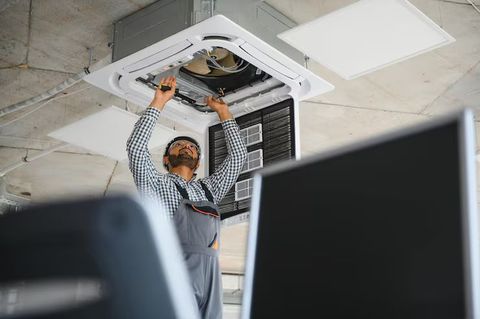
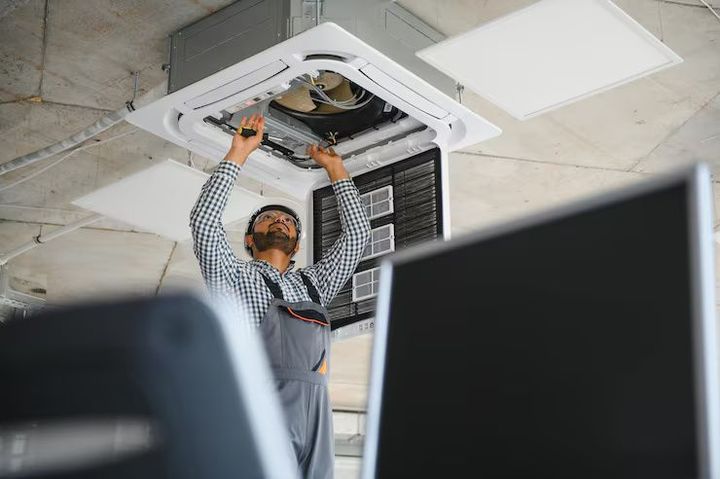
Even highly automated equipment requires regular maintenance. Sensors, filters, coils, fans, compressors, electrical components, condensate systems, and ductwork can all affect performance.
A neglected system may gradually lose efficiency or develop comfort problems before a major component fails. Regular inspections can help identify issues such as restricted airflow, dirty coils, unusual vibration, refrigerant-related problems, or drainage concerns.
A practical maintenance program commonly includes:
- Checking and replacing filters when appropriate
- Inspecting coils and heat-transfer surfaces
- Reviewing electrical and control components
- Checking condensate drainage
- Examining fans, belts, and motors where applicable
- Verifying thermostat and sensor operation
- Inspecting ductwork and air distribution
Maintenance intervals depend on equipment type, operating conditions, building environment, and manufacturer recommendations.
Energy Management Depends on More Than Equipment
A high-efficiency air conditioner does not automatically produce efficient building operation. System performance depends on equipment selection, installation, controls, building insulation, airflow, occupancy, and maintenance.
Building envelope characteristics are especially important. Poorly insulated walls, inefficient windows, air leakage, and excessive solar heat gain can increase the cooling load before the HVAC system even begins operating.
Scheduling can also influence performance. A building that remains fully conditioned during periods of low occupancy may use significantly different amounts of energy from one that adjusts operation according to actual building use.
Modern controls can help coordinate these factors by adjusting system operation according to schedules and real-time conditions.
Choosing Features According to Building Requirements
There is no single configuration that suits every business facility. A small office, retail building, warehouse, medical facility, and large commercial complex can have very different HVAC requirements.
The cooling load should be evaluated based on factors such as building size, climate, insulation, window exposure, occupancy, internal equipment, ventilation requirements, and operating hours.
The physical layout also matters. A building with many independently occupied rooms may benefit from sophisticated zoning, while an open-plan facility may have different distribution requirements.
Control complexity should match the capabilities of the facility team. Advanced automation can provide useful information, but it should remain understandable and manageable for the people responsible for operating the building.
Frequently Asked Questions
What makes a central air conditioner different from a room air conditioner?
A central system distributes conditioned air through a building using connected equipment and air-distribution components. A room air conditioner generally serves a much smaller, localized area.
Can a central cooling system control different rooms separately?
Yes, if the system incorporates appropriate zoning equipment, sensors, dampers, and controls. Zoning allows different areas to respond to their individual cooling requirements.
Why are variable-speed compressors useful?
Variable-speed compressors can adjust cooling output according to demand. This can provide more consistent temperature control and reduce unnecessary full-capacity cycling.
Does air conditioning also provide ventilation?
Not necessarily. Cooling and ventilation are separate functions, although modern HVAC systems can integrate them into a coordinated building system.
How often should a commercial central air conditioner be maintained?
The appropriate interval depends on the equipment, building conditions, operating schedule, and manufacturer recommendations. Regular inspection is generally preferable to waiting until performance problems appear.
Conclusion
A modern business central air conditioner is more than a large cooling unit. It is an integrated system involving refrigeration equipment, airflow management, zoning, sensors, controls, ventilation, and ongoing maintenance.
Features such as variable-speed operation and intelligent controls can provide more responsive temperature management, while zoning and monitoring can help adapt cooling to changing building conditions. However, equipment performance ultimately depends on appropriate design, installation, operation, and maintenance.
Understanding these components gives businesses a clearer foundation for evaluating modern commercial cooling systems and determining which features genuinely fit their building requirements.