custom sheet metal fabrication: Explore Modern Manufacturing Techniques
Custom sheet metal fabrication has become an important part of modern manufacturing, particularly when standard components cannot meet a project's dimensional, functional, or structural requirements.
It transforms flat metal sheets into precisely shaped parts, enclosures, brackets, panels, frames, and assemblies designed for specific applications.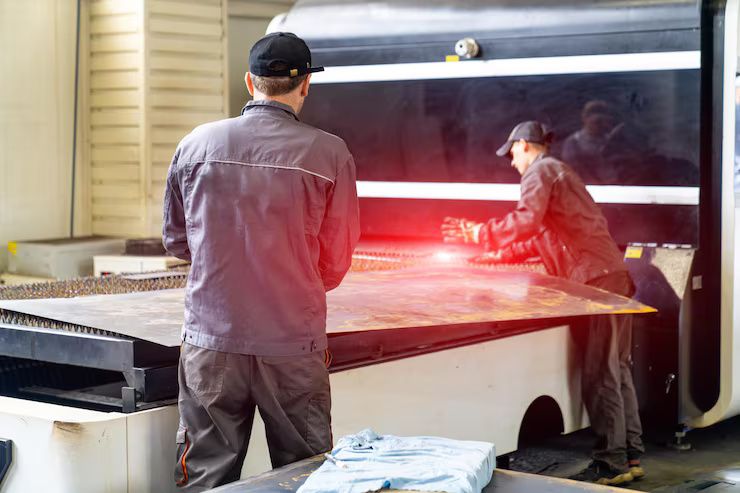
Modern fabrication combines computer-aided design, automated cutting, precision forming, advanced welding, and digital inspection. These technologies allow manufacturers to work with increasingly complex geometries while maintaining repeatability across production runs.
Understanding how custom sheet metal fabrication works provides useful insight into material selection, design preparation, forming methods, joining processes, surface treatment, and quality control. Each stage influences the accuracy, durability, appearance, and practical performance of the finished component.
From Digital Design to Fabricated Component
The process usually begins with a digital design that defines the component's dimensions, bends, holes, cutouts, tolerances, and material requirements. Engineers can use CAD software to create a detailed model before physical production begins.
This digital approach makes it easier to identify potential design problems early. Bend locations, minimum feature sizes, material thickness, and assembly requirements can be evaluated before the sheet reaches the fabrication equipment.
Once the design is prepared, manufacturing software can translate the geometry into machine instructions. This creates a connected workflow between engineering and production, reducing manual interpretation and improving consistency.
Design for manufacturability is particularly important. A part may look straightforward on a screen but become difficult to fabricate if it contains overly tight bends, unsuitable hole placement, or features that interfere with forming tools.
Advanced Cutting Techniques Improve Precision
Cutting is one of the first major manufacturing operations. Modern facilities use several technologies depending on material, thickness, geometry, production requirements, and desired edge characteristics.
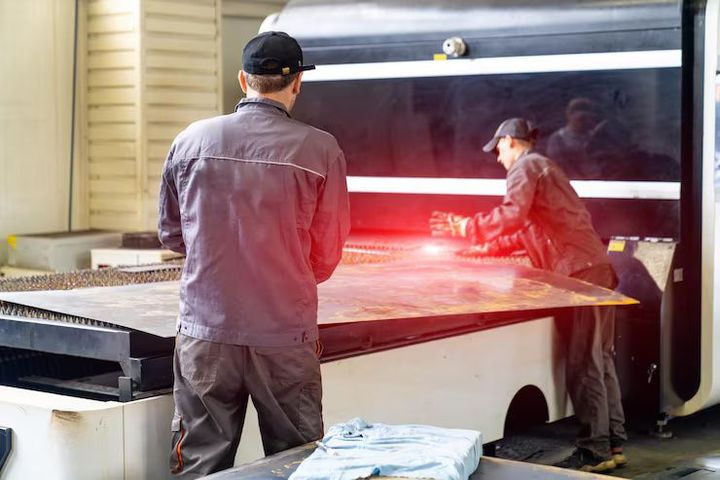
Laser cutting is widely used because it can create intricate profiles with high positional accuracy. A focused laser beam follows a programmed path, allowing manufacturers to produce detailed openings, contours, and internal features without traditional mechanical tooling.
CNC punching is another established technique. A computer-controlled punch press creates holes, slots, louvers, and other repeated features using programmed tooling. It can be particularly useful when a component contains numerous standardized openings.
Waterjet cutting uses a high-pressure stream of water, often combined with an abrasive material, to cut through various metals. Because the process does not rely on the same heat concentration associated with thermal cutting, it can be useful for applications where heat-affected areas need careful consideration.
The appropriate cutting method depends on the component rather than simply the availability of a particular machine. Material characteristics and the geometry of the finished part should guide the selection.
Precision Forming Shapes the Final Geometry
After cutting, many sheet metal components require forming. This stage transforms a flat blank into a three-dimensional shape without removing significant material.
Press brakes are commonly used for controlled bending. The machine positions the sheet between tooling and applies force to create precise bends. Modern CNC systems can automatically manage bend sequences, positioning, and machine parameters.
Forming requires careful consideration of material behavior. When metal is bent, it can experience elastic recovery known as springback. The material may slightly return toward its original shape after pressure is released, so fabrication systems compensate for this behavior when establishing bend angles.
Other forming methods include roll forming, stamping, and specialized processes for producing deeper or more complex shapes. The appropriate technique depends on geometry, material thickness, production volume, and dimensional requirements.
A well-designed forming sequence also reduces the possibility of deformation or interference between existing features and tooling.
Welding and Joining Create Complete Assemblies
Many custom sheet metal components consist of multiple fabricated pieces rather than a single formed sheet. Joining processes bring these pieces together to create a functional assembly.
Common welding methods include MIG, TIG, and resistance welding. Each process has different characteristics concerning heat input, appearance, material compatibility, joint configuration, and production requirements.
TIG welding can provide precise control and clean welds, making it useful when appearance and detailed workmanship matter. MIG welding can support efficient fabrication across many general-purpose applications. Resistance welding uses electrical resistance and pressure to join suitable sheet metal components at localized points.
Mechanical fastening may also be appropriate. Rivets, threaded inserts, screws, and other fastening methods can simplify assembly or allow components to be separated later.
The joining method should be considered during the design stage. Joint accessibility, distortion, strength requirements, inspection needs, and the sequence of assembly can all influence the final approach.
Material Selection Influences Fabrication
Material selection affects nearly every stage of custom sheet metal fabrication. Different metals behave differently during cutting, bending, welding, finishing, and service.
Carbon steel is commonly used where structural strength and general durability are important. Stainless steel provides corrosion resistance and is frequently selected for environments where hygiene, moisture, or chemical exposure is a concern.
Aluminum is valued for its relatively low weight and useful corrosion resistance. It is often incorporated into transportation, equipment, enclosure, and architectural applications.
Other alloys may be selected for specialized thermal, electrical, mechanical, or environmental requirements. Material thickness also matters because it affects bending behavior, structural rigidity, cutting parameters, and joining methods.
Choosing a material should therefore involve more than considering its basic mechanical properties. The entire manufacturing sequence and the conditions in which the finished component will operate should be considered together.
Automation Is Changing Production Workflows
Automation has become increasingly important in modern sheet metal manufacturing. CNC machinery allows cutting, punching, bending, and other operations to follow precise digital instructions with limited manual intervention.
Automated material handling can further connect individual production stages. In larger facilities, robotic systems may move sheets between machines, position components, or support repetitive handling operations.
Software integration is equally significant. Production planning systems can connect engineering information with manufacturing schedules, machine instructions, inspection records, and inventory information.
This digital continuity helps reduce avoidable production variation. It also makes it easier to reproduce a component when the same design needs to be manufactured again.
Automation does not eliminate the need for skilled personnel. Experienced engineers, programmers, technicians, welders, and inspectors remain essential for interpreting requirements, managing exceptions, maintaining equipment, and verifying results.
Surface Finishing Protects and Completes the Part
Fabrication does not necessarily end when cutting, forming, and welding are finished. Many components require surface treatment to achieve specific functional or environmental characteristics.
Powder coating can provide a durable protective finish and is commonly used for enclosures, equipment panels, frames, and other fabricated components. Wet painting can also be used when particular coating systems or appearance requirements apply.
Anodizing is frequently associated with aluminum and can improve surface characteristics while providing a controlled appearance. Brushing, polishing, deburring, and other mechanical finishing processes may also be used depending on the application.
Surface preparation is important because contamination, sharp edges, weld residue, and other imperfections can affect the final finish. Finishing requirements should therefore be included in the original design rather than treated as an afterthought.
Quality Control Begins Before Production
Quality assurance in custom sheet metal fabrication is not limited to checking the finished part. Effective control begins with the engineering information used to manufacture it.
Dimensional inspection can verify critical lengths, hole positions, bend angles, and overall geometry. Depending on the application, manufacturers may use coordinate measuring equipment, optical systems, gauges, or other inspection technologies.
Material verification can also be relevant when specific grades or thicknesses are required. Welds may receive visual or specialized inspection depending on their function and applicable requirements.
Tolerances should be realistic and linked to actual functional needs. Applying extremely tight tolerances to every feature can complicate manufacturing without necessarily improving the component's performance.
A strong quality process therefore focuses attention on the characteristics that genuinely affect fit, function, safety, and assembly.
Where Custom Sheet Metal Fabrication Fits
Custom fabrication is used across a wide range of industries because sheet metal can be engineered into both relatively simple and highly specialized components.
Applications can include electrical enclosures, industrial equipment panels, machine guards, HVAC components, transportation assemblies, architectural elements, laboratory equipment, and manufacturing machinery.
The manufacturing approach changes according to the application. An electrical enclosure may prioritize accurate openings and environmental protection, while a structural component may place greater emphasis on rigidity, weld integrity, and load-bearing characteristics.
This flexibility is one reason sheet metal remains relevant despite the growth of newer manufacturing technologies. Modern processes have expanded what can be produced while preserving the material efficiency and versatility associated with sheet-based manufacturing.
What Makes a Modern Fabrication Workflow Effective?
A reliable workflow connects design decisions with manufacturing realities. The strongest results generally come from considering the entire production sequence before fabrication begins.
Key considerations include:
- Selecting material based on the component's operating environment
- Designing bends and features around realistic manufacturing capabilities
- Choosing cutting and forming methods appropriate to the geometry
- Planning joining and finishing requirements early
- Establishing meaningful dimensional tolerances
- Inspecting critical characteristics throughout production
- Maintaining accurate digital production information
These considerations work together. A design that is excellent from an engineering perspective can still create manufacturing difficulties if fabrication requirements were not considered during development.
Conclusion
Custom sheet metal fabrication combines engineering, material science, precision machinery, skilled workmanship, and increasingly integrated digital systems. Modern cutting, forming, joining, finishing, and inspection technologies have made the process more controlled and adaptable than traditional fabrication workflows.
The most effective approach is not simply selecting the newest manufacturing technology. It is matching materials, equipment, design features, tolerances, and production methods to the actual requirements of the component. When these elements are considered together, custom sheet metal fabrication can produce precise and functional parts for a broad range of industrial applications.