Aluminum extrusion manufacturers: Explore Modern Production Methods
Aluminum extrusion manufacturers play a central role in producing precise metal profiles used across construction, transportation, electronics, industrial equipment, and renewable energy systems. The process turns aluminum billets into continuous shapes by forcing heated material through a shaped die.
Modern extrusion production is no longer limited to basic profile forming. Manufacturers increasingly combine controlled heating, advanced extrusion presses, automated handling, precision tooling, heat treatment, surface finishing, and inspection systems to achieve consistent dimensions and material properties.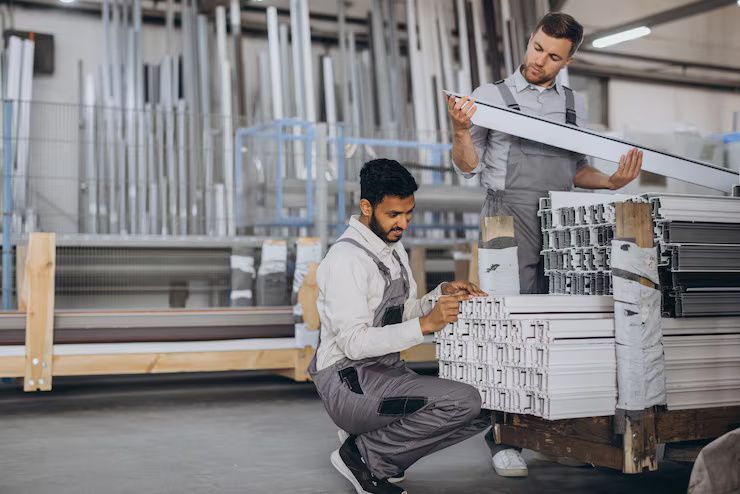
Understanding how these production methods work helps engineers, designers, procurement teams, and industrial buyers evaluate extrusion capabilities more effectively. It also explains why factors such as alloy selection, die design, temperature control, extrusion speed, and finishing processes can significantly influence the final profile.
How the Aluminum Extrusion Process Begins
The production process starts with aluminum alloy billets. These cylindrical pieces contain a specific alloy composition selected according to the mechanical properties, corrosion resistance, machinability, weight requirements, and intended application of the finished profile.
Before extrusion, the billet is heated to a controlled temperature. Heating softens the aluminum sufficiently for it to flow through the extrusion die while maintaining the material characteristics required for the selected alloy.
Temperature management is critical. Excessive heat can affect surface quality and material behavior, while insufficient heating can increase the force required by the press and create inconsistent flow through the die.
Modern production lines therefore use controlled heating systems and monitoring equipment to maintain appropriate thermal conditions throughout the process.
Die Design Determines the Profile Shape
The extrusion die is one of the most important components in aluminum profile manufacturing. Its opening determines the cross-sectional shape of the material as it leaves the press.
Simple solid profiles can use relatively straightforward die designs, while hollow or complex profiles require more sophisticated tooling. Internal cavities, thin walls, sharp transitions, and intricate geometries can make metal flow more difficult to control.
Modern aluminum extrusion manufacturers use computer-aided design and engineering analysis to develop dies that account for material flow and dimensional requirements. Proper die design can improve profile consistency while reducing defects associated with uneven metal movement.
Die maintenance is equally important. Wear can gradually affect dimensions and surface quality, making inspection and refurbishment part of ongoing production management.
Modern Extrusion Presses Improve Process Control
After heating, the billet is positioned inside an extrusion press. A ram applies substantial pressure, pushing the aluminum through the die and creating a continuous profile.
Contemporary extrusion presses use sophisticated hydraulic and electronic control systems to regulate important production parameters. These can include extrusion speed, pressure, temperature, and ram movement.
Consistent control matters because aluminum does not always flow uniformly through complex tooling. Changes in speed or temperature can influence surface appearance, dimensional stability, and metallurgical behavior.
Manufacturers therefore balance production efficiency with process stability. Running an extrusion line faster is not automatically beneficial if excessive speed produces dimensional variation or surface defects.
Cooling and Stretching Stabilize Extruded Profiles
Once the aluminum exits the die, it remains relatively hot and must be cooled under controlled conditions. Depending on the alloy and profile, manufacturers may use air, water, or other controlled cooling methods.
Cooling affects the material's mechanical properties and dimensional behavior. The method must therefore be selected according to the alloy, profile geometry, and subsequent heat-treatment requirements.
After cooling, profiles may pass through a stretching operation. Extrusion can introduce minor distortion or residual stresses into long profiles. Controlled stretching helps straighten the material and improve dimensional consistency.
The profile is then cut into specified lengths for further processing.
Heat Treatment Develops Mechanical Properties
Certain aluminum alloys require heat treatment to achieve their intended mechanical properties. This stage can significantly influence strength, hardness, and structural performance.
Common heat-treatment approaches include solution heat treatment followed by controlled cooling and artificial aging. The exact process depends on the alloy and required temper.
For example, alloys commonly used for structural and architectural applications may undergo aging processes that increase strength after extrusion.
Temperature, timing, and cooling conditions must be carefully controlled. Incorrect treatment can result in mechanical properties that differ from the required specification.
This is why extrusion manufacturing is not simply a shaping process. Metallurgical control is an important part of producing a usable engineering material.
Surface Finishing Adds Functional and Visual Properties
After extrusion and heat treatment, aluminum profiles can undergo different finishing processes depending on their application.
Anodizing creates a controlled oxide layer on the aluminum surface. It can improve corrosion resistance and provide a range of surface appearances while maintaining the underlying metallic character of the material.
Powder coating applies a durable polymer-based finish and is widely used where specific colors, textures, or additional surface protection are required.
Mechanical finishing can also be used to alter surface characteristics. Processes such as polishing, brushing, or other treatments may be selected when appearance or surface texture is particularly important.
The appropriate finish depends on environmental exposure, design requirements, durability expectations, and downstream fabrication.
Precision Fabrication Extends Beyond Extrusion
Modern aluminum extrusion manufacturers often provide secondary processing after the profile itself has been produced. This allows extruded sections to be converted into application-specific components.
Typical operations can include:
- Cutting and precision sizing
- Drilling and tapping
- CNC machining
- Punching
- Bending
- Assembly
- Joining and fabrication
CNC machining is particularly useful when profiles require accurately positioned holes, slots, pockets, or other features.
Secondary fabrication can reduce the amount of processing required later in an industrial assembly. However, each operation introduces additional dimensional and quality considerations, so manufacturers must maintain control across the entire production sequence.
Automation and Digital Monitoring in Extrusion Plants
Automation has become increasingly important in modern extrusion facilities. Automated material handling can move billets and profiles between production stages while reducing manual intervention.
Sensors and digital monitoring systems can track variables such as temperature, pressure, speed, and equipment performance. Production data can then be used to identify process deviations before they create large quantities of nonconforming material.
Some facilities also use automated inspection technologies to monitor dimensions and surface characteristics. These systems complement conventional quality-control procedures rather than eliminating the need for skilled technical oversight.
Digital production records can also improve traceability. When a profile must meet a defined specification, maintaining information about alloy batches, processing conditions, heat treatment, and inspection results can help establish production history.
Quality Control Starts With Material Selection
Quality assurance begins before the billet enters the extrusion press. Alloy chemistry must correspond to the required specification, while billets should be inspected and properly handled before production.
During extrusion, manufacturers monitor dimensions, surface condition, temperature, and process stability. Finished profiles may undergo dimensional inspection, mechanical testing, surface evaluation, and other examinations depending on their intended application.
Industry standards can provide specifications for aluminum alloys, tempers, dimensions, tolerances, and testing methods. Standards such as those developed by ASTM International and other recognized technical organizations help create consistent terminology and measurement practices across the industry.
For critical applications, documentation and traceability become particularly important because material performance can directly affect the reliability of the finished assembly.
Choosing an Appropriate Manufacturing Approach
Different applications require different extrusion capabilities. A profile intended for a building façade may have very different dimensional, surface, and finishing requirements from a structural component used in transportation equipment.
When evaluating aluminum extrusion manufacturers, technical considerations can include:
- Available alloy and temper capabilities
- Maximum profile dimensions
- Press capacity
- Die-development capabilities
- Dimensional tolerances
- Heat-treatment processes
- Surface-finishing options
- Secondary fabrication capabilities
- Inspection and testing procedures
- Material traceability
The right manufacturing approach begins with the requirements of the final application rather than simply selecting the largest available production system.
Where Modern Aluminum Extrusions Are Used
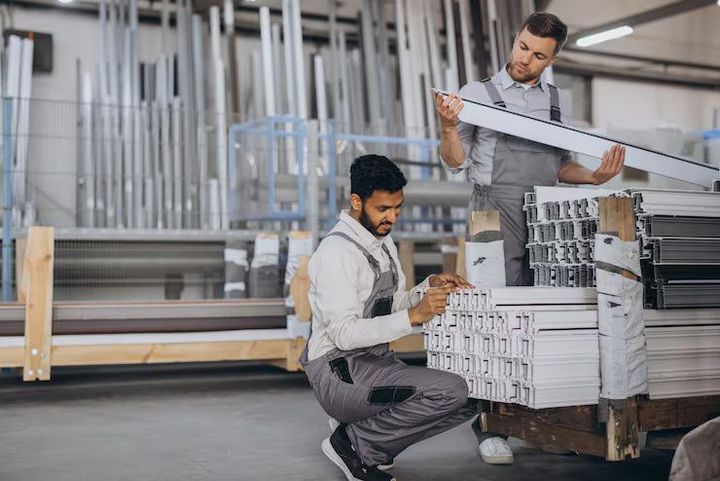
Extruded aluminum profiles are found across a wide range of industries because aluminum combines relatively low density with useful strength, corrosion resistance, thermal conductivity, and recyclability.
Construction applications include framing systems, architectural components, curtain-wall elements, and structural profiles. Transportation applications can include vehicle structures, rail components, heat-management systems, and lightweight assemblies.
Industrial equipment frequently uses aluminum extrusion for machine frames, enclosures, supports, conveyor structures, and modular systems. Electronics and energy applications can also use extruded profiles for thermal management, housings, and structural components.
The ability to create complex continuous geometries is one of the main reasons extrusion remains valuable across these different sectors.
Conclusion
Modern aluminum extrusion manufacturers combine material science, precision tooling, controlled extrusion, heat treatment, finishing, automation, and inspection to produce consistent aluminum profiles. The manufacturing process extends well beyond pushing a heated billet through a die.
For anyone evaluating extrusion capabilities, understanding the complete production chain provides a clearer view of how profile geometry, alloy selection, process control, finishing, and quality assurance affect the finished component. Modern extrusion is ultimately a coordinated manufacturing process in which each stage contributes to dimensional accuracy, material performance, and application suitability.