Plastic Extrusion Technology Guide to Industrial Manufacturing Processes
Plastic extrusion technology is one of the most widely used processes for producing continuous plastic products with consistent shapes and dimensions. It supports the manufacture of pipes, tubing, sheets, films, profiles, insulation, and many other products used throughout industrial supply chains.
The process combines material preparation, controlled heating, pressure, shaping, cooling, and finishing into a continuous production sequence. Its ability to produce long sections with repeatable characteristics makes extrusion particularly useful when manufacturers need consistent output across extended production runs.
Understanding how plastic extrusion works provides useful insight into equipment selection, material behavior, process control, quality management, and production efficiency. These factors influence the final characteristics of an extruded product and determine how reliably a manufacturing line performs.
How Plastic Extrusion Technology Works
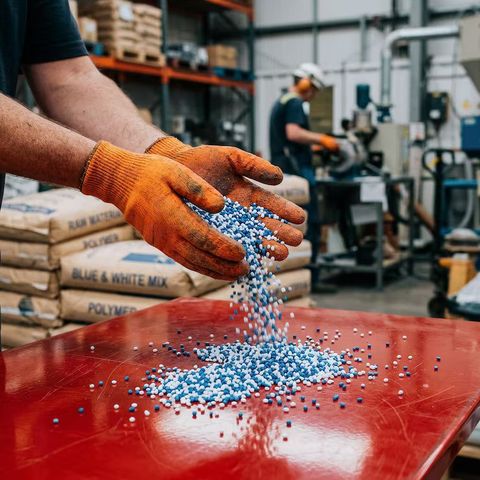
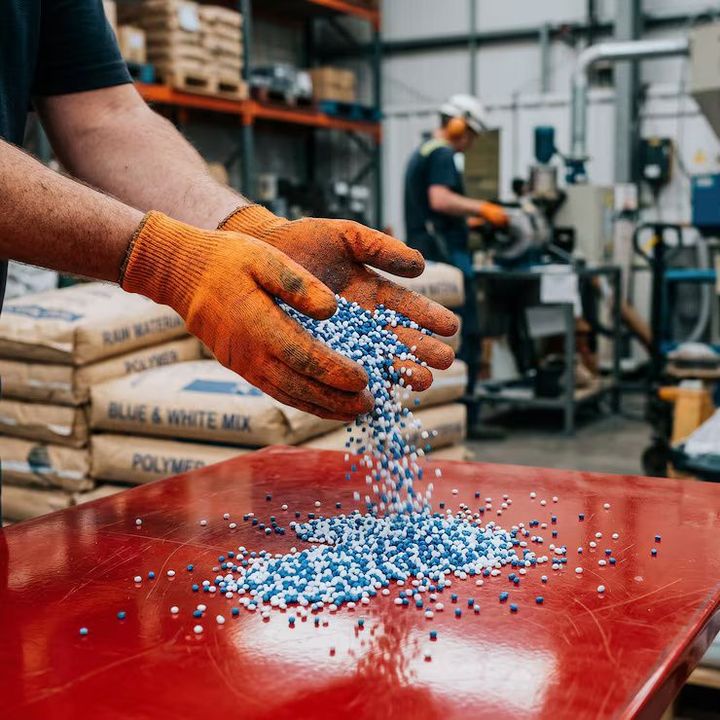
At its core, plastic extrusion converts solid polymer material into a continuously shaped product. Plastic resin, commonly supplied as pellets or granules, enters the extrusion machine through a feed system before moving into a heated barrel.
Inside the barrel, a rotating screw transports the material forward. Heat from the barrel and mechanical energy generated by screw rotation gradually soften and melt the polymer.
The molten plastic is then pushed through a die. The die determines the basic cross-sectional shape of the emerging material, transforming the polymer melt into the desired continuous profile.
After leaving the die, the product is cooled and stabilized before being cut, wound, stacked, or otherwise finished according to its intended application.
Major Equipment Used in an Extrusion Line
A complete extrusion system consists of several interconnected components. Each plays a specific role in maintaining stable material flow and product quality.
The extruder is the central machine, containing the screw, barrel, drive system, heating zones, and controls. The screw is particularly important because its geometry influences melting, mixing, pressure generation, and output.
A typical line can also include:
- Feed hoppers for introducing polymer material
- Dryers for moisture-sensitive resins
- Heaters and temperature-control systems
- Screens and filtration assemblies
- Dies for shaping the molten polymer
- Cooling tanks or air-cooling systems
- Haul-off equipment for controlled movement
- Cutting or winding units for final handling
The configuration depends on the material, product geometry, and manufacturing requirements.
Material Selection and Polymer Behavior
Plastic extrusion technology can process many thermoplastic materials, but each polymer behaves differently during heating and shaping.
Polyethylene, polypropylene, polyvinyl chloride, polystyrene, and engineering thermoplastics are used in different applications because they offer distinct combinations of strength, flexibility, chemical resistance, thermal stability, and durability.
Material characteristics affect the processing window. Melt temperature, viscosity, moisture sensitivity, and thermal stability all influence how a polymer moves through the screw and die.
Moisture is particularly important for hygroscopic materials. Excess moisture can contribute to bubbles, surface defects, dimensional instability, and other quality problems, making proper material preparation an important part of extrusion control.
The Role of the Extrusion Screw
The screw is one of the most technically important parts of an extrusion machine. Its geometry determines how effectively the polymer is transported, melted, mixed, and compressed.
Many screws contain different functional zones. The feed section accepts and moves solid material, while the transition region promotes melting and compression. The metering section then helps deliver a more uniform melt toward the die.
Screw design may be adapted for specific polymers or applications. Factors such as flight depth, compression ratio, length-to-diameter ratio, and mixing elements can influence throughput and melt quality.
A properly matched screw improves process stability and helps reduce problems associated with inconsistent melting or material residence time.
Die Design Determines Product Geometry
The die converts the molten polymer into its final continuous shape. It is therefore critical to both dimensional accuracy and surface quality.
Different products require different die configurations. A pipe, flat sheet, film, cable coating, and custom profile cannot be produced using the same die geometry.
Die design must account for melt flow, pressure distribution, material shrinkage, and the tendency of polymers to expand slightly after exiting the die. This behavior, known as die swell, must be considered when establishing tooling dimensions.
Proper die maintenance is also important. Deposits, wear, or uneven flow channels can create surface imperfections and dimensional inconsistencies.
Cooling and Dimensional Control
Once the polymer exits the die, it must be cooled sufficiently to retain its intended geometry.
Cooling methods vary according to the product. Pipes and profiles may pass through calibrated cooling tanks, while films and sheets can use chilled rollers or controlled air systems.
The rate of cooling affects dimensional stability, surface appearance, and internal material characteristics. Cooling too quickly or unevenly can introduce stresses, warpage, or variations across the product.
For this reason, modern extrusion lines often use precise temperature monitoring and feedback controls throughout the cooling section.
Process Control in Modern Manufacturing
Consistent plastic extrusion depends on controlling several variables simultaneously. Temperature, screw speed, pressure, feed rate, cooling conditions, and haul-off speed all interact with one another.
A change in one parameter can influence another. For example, increasing screw speed can raise throughput and alter melt pressure, while changes in cooling or haul-off speed can affect final dimensions.
Modern extrusion systems increasingly use digital controls and automated monitoring to maintain stable process conditions. Sensors can measure temperatures and pressures at multiple points, allowing operators to identify deviations before they become significant quality problems.
Data collection also supports process analysis and maintenance planning by revealing patterns that may not be obvious during routine operation.
Quality Control and Common Defects
Quality control in extrusion involves both process monitoring and inspection of finished products. Manufacturers may evaluate dimensions, surface characteristics, mechanical properties, color consistency, and other application-specific requirements.
Common extrusion defects include:
- Uneven thickness
- Surface roughness
- Bubbles or voids
- Warping
- Poor dimensional stability
- Color variations
- Die lines or flow marks
- Incomplete fusion
The causes of these problems can vary considerably. Incorrect temperature settings, contaminated material, unstable feed rates, poor die alignment, inadequate drying, and inconsistent cooling can all affect results.
Effective troubleshooting starts by examining the relationship between the defect and the process conditions rather than changing multiple parameters at once.
Common Industrial Applications
Plastic extrusion is used across a broad range of manufacturing sectors because the process can produce many continuous geometries.
In construction, extrusion supports the production of pipes, conduit, window profiles, panels, and sealing products. Electrical manufacturing uses extrusion for insulation and protective cable jackets.
Packaging applications include films, sheets, and specialized barrier structures. Automotive manufacturers also use extruded profiles, seals, tubing, and selected interior and exterior components.
The medical, agricultural, telecommunications, and consumer-product sectors use extrusion as well, often requiring specialized materials and tighter process control.
Improving Extrusion Line Efficiency
Production efficiency depends on maintaining stable operation rather than simply increasing machine speed. High throughput can become counterproductive when it creates excessive scrap, dimensional variation, or frequent shutdowns.
Manufacturers can improve performance through preventive maintenance, consistent material handling, regular die inspection, accurate temperature control, and systematic process documentation.
Operator training also matters. Experienced personnel can recognize changes in melt behavior, pressure patterns, surface appearance, and equipment performance before a problem becomes severe.
Reducing material waste is another major consideration. Stable startup procedures, accurate process settings, and careful changeover practices can help reduce unnecessary scrap.
Sustainability and Material Efficiency
Environmental considerations are increasingly influencing extrusion operations. Manufacturers are examining ways to reduce process waste, improve energy efficiency, and incorporate recycled materials where application requirements permit.
Reprocessed polymer can sometimes be introduced into extrusion systems, although its use requires careful evaluation of contamination, degradation, moisture, and consistency.
Energy efficiency can also be improved through better barrel insulation, optimized heating controls, efficient drives, and stable process conditions. These improvements can reduce unnecessary energy consumption while supporting consistent manufacturing performance.
Frequently Asked Questions
What products can plastic extrusion technology produce?
Plastic extrusion can produce continuous products such as pipes, tubing, sheets, films, cable insulation, seals, and custom profiles. The die determines the basic shape of the finished product.
What materials are commonly used in plastic extrusion?
Common materials include polyethylene, polypropylene, PVC, polystyrene, and various engineering thermoplastics. Material selection depends on mechanical, thermal, chemical, and application requirements.
Why is temperature control important in extrusion?
Temperature influences polymer melting, viscosity, pressure, flow, and final product quality. Poor thermal control can lead to defects such as inconsistent dimensions, surface problems, or incomplete melting.
What causes extrusion defects?
Defects can result from unsuitable processing conditions, moisture, contamination, incorrect die settings, unstable feeding, cooling problems, or equipment wear. Identifying the underlying process cause is essential for effective correction.
How does automation improve extrusion manufacturing?
Automation can continuously monitor temperatures, pressures, speeds, and other variables. This helps maintain stable operating conditions, detect deviations earlier, reduce manual adjustments, and support consistent product quality.
Conclusion
Plastic extrusion technology combines material science, mechanical engineering, thermal control, tooling, and automation into a continuous manufacturing process. Its versatility allows producers to create a wide range of products while maintaining repeatable dimensions and properties across extended production runs.
Reliable extrusion depends on much more than the extruder itself. Material preparation, screw and die design, cooling, process control, maintenance, and quality inspection all contribute to the final result. As manufacturing systems become more connected and data-driven, better monitoring and process optimization will continue to strengthen the efficiency, consistency, and flexibility of plastic extrusion operations.