Industrial Fasteners: Basics of Grades, Materials, and Design Principles
Industrial fasteners may be small compared with the machines and structures they connect, but their role in engineering is fundamental. Bolts, screws, nuts, washers, studs, and related components hold assemblies together while transferring loads and maintaining alignment during operation.
Fastener selection becomes more demanding when equipment is exposed to vibration, high temperatures, corrosion, repeated loading, or heavy structural forces. A component that appears suitable based on size alone may perform poorly if its material, strength grade, thread design, or installation method does not match the application.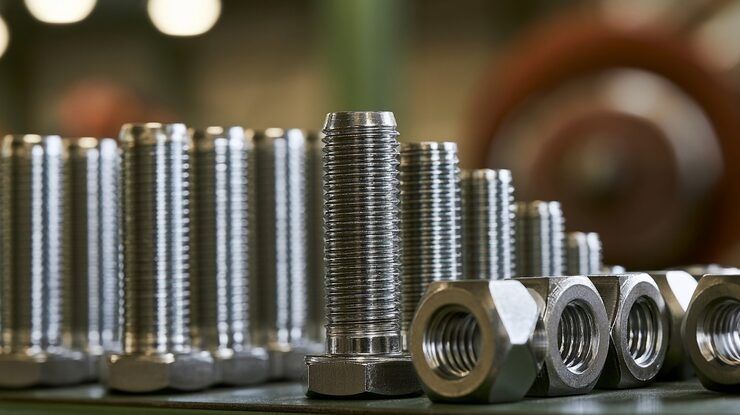
Understanding industrial fasteners therefore requires more than knowing the difference between a bolt and a screw. Engineers and maintenance professionals must consider grades, materials, dimensions, load conditions, joint design, and installation practices together to create secure and dependable connections.
Why Fastener Selection Starts With the Joint
A fastener is only one part of a larger joint system. Its performance depends on the materials being connected, the forces applied to the assembly, the environment, and the way the connection is tightened.
Engineers typically consider several load types, including tension, shear, bending, and cyclic loading. Vibration introduces additional concerns because repeated movement can reduce clamping force or contribute to fatigue when a joint is not designed correctly.
Joint stiffness also matters. A connection between rigid steel components behaves differently from one joining thinner sheet metal, aluminum, or composite materials. The right fastener must work with the joint rather than being selected independently from it.
Understanding Fastener Grades and Strength Classes
Fastener grades communicate important information about mechanical performance. However, the marking system depends on the fastener standard and geographic market, so grade labels should always be interpreted according to the relevant specification.
For metric bolts and screws, property classes such as 8.8, 10.9, and 12.9 are commonly used. These designations relate to mechanical properties, including tensile and yield strength. Higher numbers generally indicate greater strength, but a higher-strength fastener is not automatically the right choice for every application.
For inch-series fasteners, systems such as SAE grades use markings that communicate strength categories. Common examples include Grade 5 and Grade 8, though the appropriate specification depends on the application and governing standard.
Strength class should be considered alongside ductility, fatigue behavior, corrosion resistance, temperature exposure, and compatibility with the connected materials.
Common Materials Used for Industrial Fasteners
Material selection influences how a fastener behaves under load and environmental exposure. Carbon and alloy steels are widely used because they can provide high mechanical strength and predictable performance across many industrial applications.
Stainless steel is often selected where corrosion resistance is a major concern. Austenitic stainless grades are common in equipment exposed to moisture and chemically aggressive environments, while other stainless families provide different combinations of strength, hardness, and corrosion resistance.
Other materials can be appropriate in specialized applications. Aluminum fasteners may be useful where low mass is important, while nickel-based alloys can be selected for demanding temperature or chemical environments.
Material compatibility deserves particular attention. When dissimilar metals are joined in the presence of moisture, galvanic corrosion can occur. Joint design may therefore require isolation materials, protective coatings, or a different fastener material.
Threads Are a Critical Part of Fastener Design
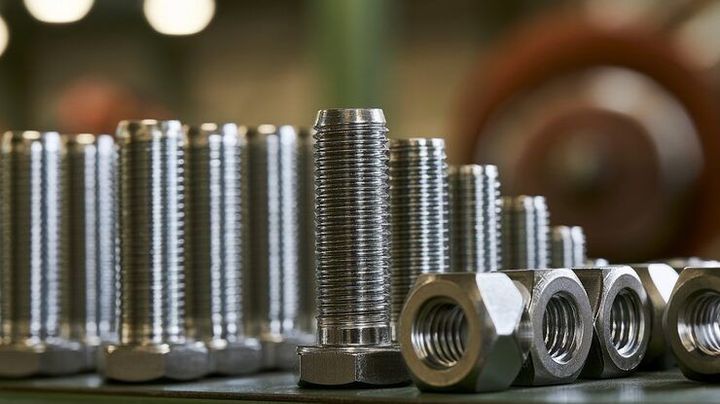
Thread geometry determines how a fastener engages with the mating component and how effectively loads are transferred through the joint.
Coarse threads generally provide deeper engagement and can be practical in many general engineering applications. Fine threads provide greater thread engagement per unit length and can be useful where adjustment, preload control, or limited material thickness is involved.
Thread form, pitch, diameter, tolerance, and engagement length all influence connection performance. Damaged, contaminated, or mismatched threads can prevent a joint from achieving the intended clamping force.
Internal and external threads must also be compatible with the specified tolerance system. For precision assemblies, uncontrolled thread variation can affect installation consistency and joint reliability.
How Joint Design Affects Fastener Performance
A strong fastener cannot compensate for a poorly designed joint. The surrounding materials must distribute loads effectively so that excessive stress does not develop around holes, threads, or contact surfaces.
One key consideration is preload, the tension introduced into a fastener when it is tightened. Proper preload keeps connected parts clamped together and helps prevent separation or movement during service.
Too little preload can allow joint movement, while excessive tightening can stretch the fastener beyond its intended range or damage the connected materials. For this reason, installation torque should be based on an appropriate engineering specification rather than an arbitrary value.
Washers, locking features, prevailing-torque nuts, thread-locking compounds, and other joint elements may be used where vibration or other conditions create a risk of loosening.
Choosing Fasteners for Harsh Environments
Industrial equipment may operate in environments that expose fasteners to moisture, chemicals, heat, salt, dust, or continuous vibration. These conditions can change the requirements significantly.
Corrosion-resistant materials or protective coatings can improve durability, but coatings must also be compatible with the fastener grade and installation process. Some coatings can influence friction, which may affect the relationship between applied torque and resulting preload.
Temperature is another major consideration. Material strength can change at elevated temperatures, while thermal expansion differences between fasteners and joined components may alter joint behavior.
In applications with sustained vibration or cyclic loading, fatigue resistance becomes especially important. A connection that survives a static load may still experience failure if it is repeatedly stressed over an extended operating period.
Installation Practices Matter as Much as Specification
Correct fastener selection can be undermined by poor installation. Threads should be clean, mating surfaces should be properly prepared, and tightening tools should be appropriate for the required level of control.
Critical assemblies may use calibrated torque tools, torque-angle procedures, tension measurement, or other controlled installation methods. The objective is to achieve consistent preload across the joint rather than simply making the fastener feel tight.
Technicians should also follow the applicable assembly specification for lubrication, tightening sequence, reuse limitations, and inspection. Fasteners that have experienced deformation, thread damage, or excessive loading may no longer provide predictable performance.
Standards Provide a Common Engineering Language
Industrial fasteners are manufactured and evaluated according to numerous national, regional, and industry standards. Depending on the application, specifications may address dimensions, mechanical properties, materials, coatings, thread geometry, testing, and identification markings.
Standards from organizations such as ISO, ASTM, and SAE help engineers communicate requirements consistently across manufacturing and maintenance environments. The relevant standard should always be confirmed before specifying a fastener because similar-looking products can have significantly different mechanical or dimensional requirements.
Documentation and traceability are particularly important in critical applications where material certificates, batch identification, or inspection records may be required.
Practical Principles for Selecting Industrial Fasteners
A reliable selection process considers the entire joint rather than focusing only on diameter or appearance. Important questions include:
- What loads will the joint experience?
- What materials are being connected?
- What fastener grade or property class is required?
- Will the connection face corrosion, heat, or vibration?
- How much preload is needed?
- Are the threads and dimensions compatible?
- What installation method will be used?
- Does the application require a specific standard or certification?
Answering these questions early can prevent performance problems later in the assembly's operating life.
Frequently Asked Questions
What determines the strength of an industrial fastener?
Strength depends on factors such as material, heat treatment, diameter, thread dimensions, and the applicable grade or property class. The surrounding joint design also affects how much load the connection can safely transfer.
Is a higher fastener grade always better?
No. Higher strength can be useful in specific applications, but strength must be balanced with ductility, corrosion resistance, fatigue behavior, temperature conditions, and compatibility with the joint materials.
Why is preload important in a bolted joint?
Preload creates clamping force between the joined parts. Correct preload helps resist separation and movement, while insufficient or excessive preload can reduce joint reliability.
Can industrial fasteners be reused?
Reuse depends on the fastener type, application, specification, and installation history. Some critical connections require replacement after removal, particularly when the fastener has experienced deformation or controlled tightening procedures.
How should fastener corrosion be addressed?
The approach depends on the environment and materials involved. Options can include corrosion-resistant alloys, suitable coatings, protective treatments, or isolation between dissimilar metals to reduce galvanic effects.
Conclusion
Industrial fasteners are fundamental engineering components whose performance depends on much more than basic dimensions. Grades and materials determine mechanical and environmental characteristics, while thread geometry, preload, joint design, and installation practices determine how effectively those properties are used.
A sound fastener specification considers the complete operating environment and the behavior of the joint as a system. By matching material, strength class, thread characteristics, standards, and installation methods to the application, engineers can create connections that remain secure, durable, and dependable throughout demanding industrial service.